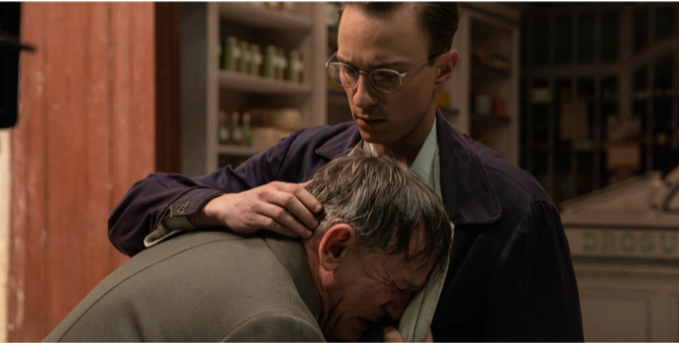
‘Queer’ Review
By Colum Clarke, Contributor
‘I want to talk to you…without speaking.’
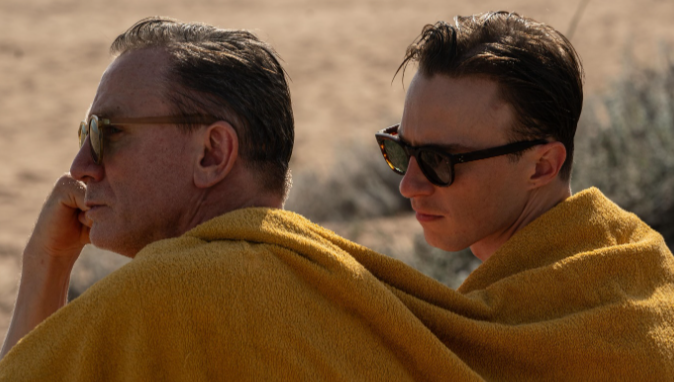
Hot off the success of his sweaty, scintillating (and largely overrated) Challengers, Luca Guadagnino delights us with a screen adaptation of Queer, one of Beat iconoclast William S. Burroughs’ many literary masterpieces.
Queer follows Burroughs’ semi-autobiographical alter ego Bill Lee through late 1940s Mexico as he navigates the queer scene, steered by his own lust-driven desires. Lee finds himself enamoured with the young Eugene Allerton, who becomes the sole object of Lee’s obsession. Sauntering longingly after his younger lover who appears to show no reciprocated interest leads Lee to convince Allerton to accompany him on a venture into the deep south to locate a mysterious drug called yage, which Lee believes holds mind controlling qualities.
Queer is a truly faithful adaptation of its controversial source material; the dialogue is almost verbatim and expertly captures the soul of that idiosyncratic, sardonic and maverick voice found only within the confines of a Burroughs novel. Notable locations in the novella, such as the Ship Ahoy bar, can be seen throughout, once again speaking to the film’s intricate detail. The gorgeous cinematography transports you to the streets of Mexico, its seedy bars and the sultry jungle. Guadagnino once again recruits the musical ears of Trent Reznor and Atticus Ross of Nine Inch Nails fame to curate a soundtrack comprising the songs of Nirvana, Sinead O’Connor, Prince and other original songs, a compilation of melodies that gracefully accompany the unfolding scenes. Frightening dreams and absurd scenes of extreme drug-induced satisfaction are dotted along the course of the film, which help cultivate that surreal and haunting vibe seen in the likes of Naked Lunch (another opus from Burroughs) but also add to the overall quality of the film itself.
Daniel Craig shines in the role of Bill Lee, whose utter desperation is evident in every subtle movement, every flutter of the eyes, every word spoken. One may view this role as an ambitious, sudden and potentially detrimental turn in the widely lauded Bond actor’s career trajectory-but nonetheless, Craig gives an almost poetic performance that aches with the heavy burden of love.
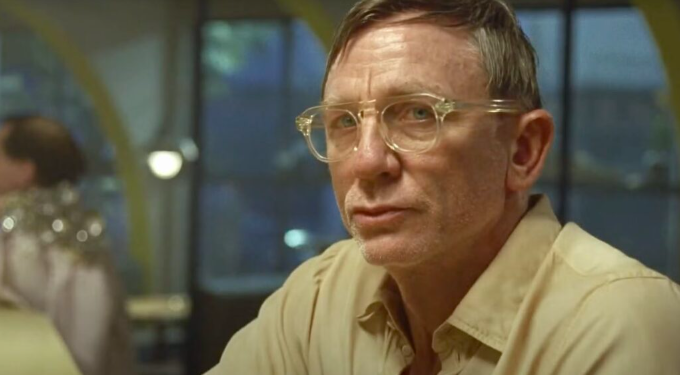
Craig and co-star Drew Starkey (in the role of Allerton) foster a believable chemistry between one another, primarily via the former’s contributions. Starkey is a good look for the character: young, alluring and handsome, oozing a smug, almost ‘holier-than-thou’ energy from his very first scene…but Starkey’s performance feels rather stale at times.
Much the same can be said for Jason Schwartzmann’s minor role as fellow queer associate and tequila bar denizen Joe Guidry: every line delivered feels utterly flat and meaningless. It feels as though Schwartzmann is going for something more subtly comedic, resulting in a jarring and out-of-place performance.
Lesley Manville makes the best use of her short screen time, delivering a scarily memorable performance as the kooky jungle dweller Doctor Cotter whom Lee and Allerton track down in order to sample their sought-after telepathic drug.
Queer is not your conventional film of unrequited love; it’s a heart wrenching tale of suppressed obsession and unattainable intimacy. It’s a sometimes raunchy and playful story, but just as desperate and painful.
For the bona fide Burroughs fan, this is your film. Certain moments in the film are particularly eye-opening and only significant if you have read Burroughs’ more widely known works (primarily Junky and of course the source material). To Guadagnino’s credit, he has crafted a spectacular and genuine adaptation of the iconic novella, with only slight variations made to the story (which are done rather effectively). Queer is one of the more exciting releases of recent times and is truly a must watch.