

How Ireland Fell Out of Love with Citizens' Assemblies
By Harry McGuire, Contributor
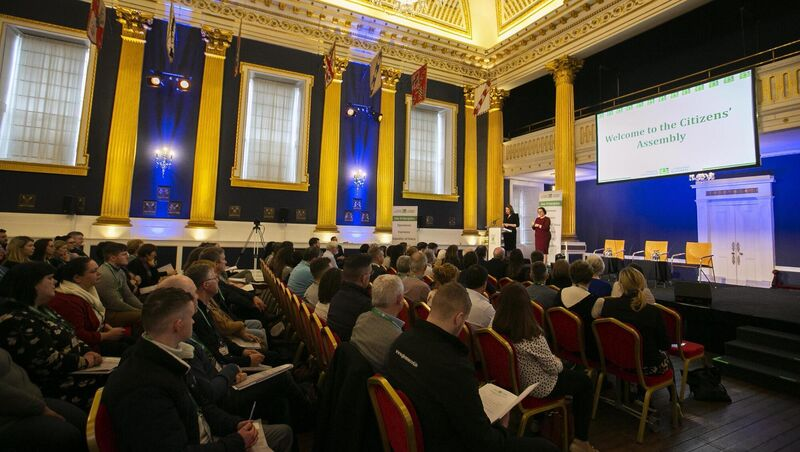
I don’t think I have ever heard someone say, “I want a citizen assembly on that”, and for good reason. What was once (and may still be in fairness) prescribed as a cure for democracy has fallen out of interest with both the public and politicians, with the current programme for government having no mention of any new citizens’ assembly or referendum. This is a shame for many people my age who were politically educated at a time of positive social change because of citizens’ assemblies held to amend the constitution during the 2010s. At a time of such discontent and hopelessness with the idea that the government can solve complex issues that people care deeply about, we should re-examine how citizens’ assemblies are held so that they cannot be used for virtue-signalling by governments but as a truer form of deliberative democracy.
Assemblies were once hailed as a way to get past self-interested politicians and human nature with the ability to fix primordial issues relating to democracy. This changed after the last referendum on care and marriage, which left a sour taste in many mouths. The government did not want to go with the wording that the assembly on gender equality decided on, as it would have obliged the government to do things that it did not sign up to when it agreed to devolve the issue to the assembly. This well reported fiasco pretty much covered all the issues with the way the government uses assemblies in Ireland and severely harmed the public image of the assembly process. What evidence is used and therefore what is discussed is controlled by the government, and increasingly, findings and recommendations tend to suggest the direction the government is already moving towards. Assemblies also act as a veil to hide behind for controversial decisions and they have increasingly been used for trivial issues that the government could have easily decided themselves.
For example, after Russia invaded Ukraine in 2022 while citizens’ assembly mania was still in vogue, Micheal Martin suggested in Dáil Éireann that an assembly to look at the issue of Irish neutrality should be created. Clearly as the Taoiseach he could have just assessed global circumstances, public opinion, and support within government, so that with a bit of courage, the government could have made its own decision on the matter.
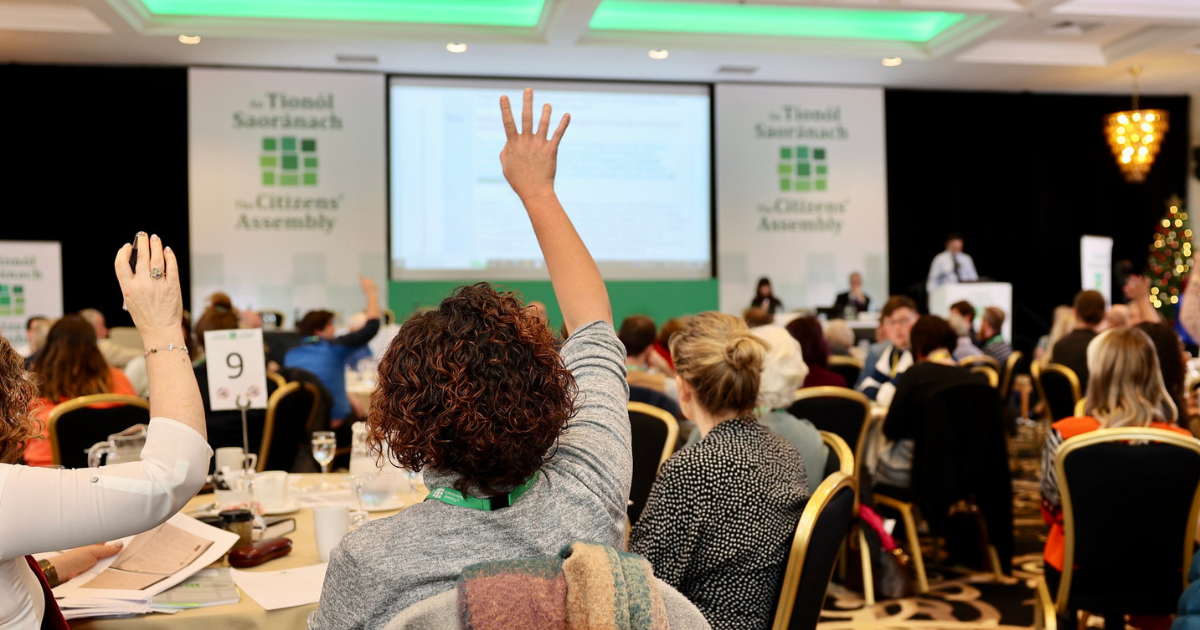
The public are most likely disappointed that citizens’ assemblies didn’t end up as a snake-oil solution to politics, and that most topics looked at didn’t change their lives, bar abortion and same sex marriage. If assemblies were used on more long-term bread-and-butter issues rather than constitutional housekeeping or identity-based politics this may change. A very far-reaching issue that was indeed examined, and in which policy suggestions were made, happened in the Citizens’ Assembly on Biodiversity Loss in 2022. As we all know, this did not stop climate change or biodiversity loss. Depending on the task at hand policy recommendations in assembly reports can be relatively concise but in this most of the findings were just vague notions about what the government should aspire to do, with little to no steps as to how society itself must change and make compromises outside the actions of politicians. Instead, the report mostly just suggested the creation of new empty vessels in the form of government departments and restructured bodies to do yet specified things to solve biodiversity loss. Citizens’ assemblies were only supposed to nicely compliment the political system when they were created, rather than to introduce deliberative democracy to Irish politics and hold the Oireachtas to account. No one ever expected the Grand Hotel in Malahide to become the third house in Irish politics, or even the only one.
The experts/activists used are mostly groups or people the government consults with anyway, the emotional stories and deeply personal opinions that people share at the hotel can be heard in normal everyday life and discourse. Assemblies may be more democratic if they end up being listened to, but they do not come up with solutions that are different to those formulated inside Leinster House. The earlier mentioned recommendations on biodiversity loss most consequential suggestions were adding an article to the constitution which gave the environment legal rights. This was already in the Green Party’s manifesto for the 2020 general election before they entered government, this is also an established concept in environmental law. The assembly members and politicians both seem to be approaching problems in a similar matter, so assemblies aren’t some sort of democratic sandbox that is useful for TDs starved of creativity to get their policy ideas from; they just discuss ideas that are already in the public realm.
Assemblies barely have any legal status, and more should be given so that the recommendations of assemblies must be at least voted on inside the Oireachtas. The original convention on the constitution contained a 33-out-of-100 minority of politicians so that at least Oireachtas members could have their personal bias challenged or altered. This may be a good idea to bring back even if TDs and Senators are silenced by the party whip or end up skewing the final recommendations. Hopefully, this will mean governments use assemblies as a last resort instead of spending tens of thousands of Euros for a mini vox pop.
NGO’s and outside influences are having an increasing amount of control over elected officials compared to ordinary members of political parties and society, this is causing a disconnect in policy choices made. This can change if assemblies are left to decide for themselves what experts they talk to and what evidence they examine, or if more pressingly, local communities had the power to start their own local assembly based on petition rather than it being some sort of token gift granted to citizens by the Oireachtas. A very foreseeable downside to this is it could create massive fracturing of assemblies based on what evidence “people want to see” to add to their confirmation bias. If the government has the right to keep on voting down whatever sort of findings these bodies make unless they agree with them, it will just make people even more dejected from the democratic process, undoing citizens’ assemblies’ raison d’être.
An assembly will most likely be used next to agree on wording for constitutional amendments, and if it ain’t broke why try fixing it? Bunreacht na hÉireann is very long and strong compared to most constitutions. We are still waiting for the government to follow through on important amendments that have a material impact on people’s lives like lowering the voting age to 17 and the much-anticipated Unified Patent Court referendum. Citizens’ assemblies will continue to be meaningless unless they are put on a stronger legal or even constitutional footing. They will most likely get pulled from the attic when a polarising and defining issue like an Irish unity referendum comes around rather than to just suggest preferences for polarising and defining government policy, like in housing for example. Currently they do not hold the decision-making processes of the government to account and have no democratic purpose.
